

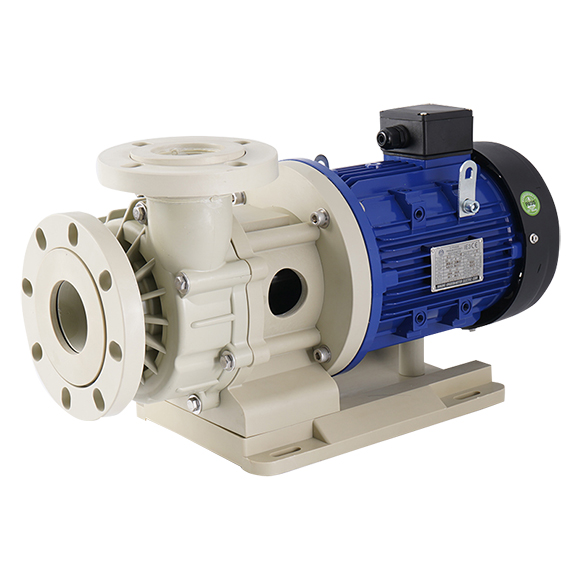
Preventing dry running is the single most critical factor in maintaining the lifespan of a magnetic drive pump. Because these pumps lack a mechanical seal and rely on the pumped fluid for both cooling and lubrication of the internal sleeve bearings, even a few minutes of dry operation can lead to catastrophic heat buildup and component failure.
1. Primary Monitoring Systems
The most effective way to prevent damage is to install sensors that automatically shut down the pump when flow is interrupted.
-
Power Monitors: These are often considered the “gold standard” for mag-drive pumps. They monitor the motor’s power consumption. Since a pump running dry or against a closed valve draws significantly less power than one under load, the monitor can trip the circuit immediately.
-
Flow Switches: Installed in the discharge piping, these detect the physical movement of liquid. If the flow drops below a set point, the pump shuts down.
-
Temperature Sensors (PT100/Thermocouples): Placing a sensor on the containment shell (the “can”) is highly effective. If the fluid stops circulating, the eddy currents generated by the magnets will rapidly heat the shell. A temperature spike triggers an emergency stop.
2. System Design & Installation
Good engineering can physically prevent air from entering the pump or ensure it remains “wetted” during brief interruptions.
-
Self-Priming Chambers: If the pump is located above the liquid level, use a priming tank or a specialized self-priming magnetic drive model to ensure the suction line remains full of liquid.
-
Low-Level Cutoff: Install float switches or ultrasonic level sensors in the source tank. This ensures the pump cannot start—or will stop—if the liquid level is too low to provide a steady feed.
-
Suction Line Integrity: Ensure all joints on the suction side are airtight. Since this side is under vacuum, a tiny leak won’t leak fluid out, but it will suck air in, eventually causing the pump to lose prime and run dry.
3. Operational Best Practices
Human error or “process hiccups” are common causes of dry running. Implementing these checks can mitigate those risks:
-
Vent the Air: Always “jog” or manually vent the pump before startup to ensure the internal cooling paths are completely filled with liquid.
-
Bypass Lines: In systems where discharge valves might be closed frequently, install a small bypass line (minimum flow line) back to the source tank. This ensures a constant, small volume of fluid is always circulating through the pump to dissipate heat.
-
Avoid “Dead-Heading”: Never run the pump against a completely closed discharge valve for extended periods. While not strictly “dry,” it prevents heat dissipation and can lead to the same result: melted internal bushings.
4. Material Selection
If your process is prone to occasional dry running, you can specify materials that offer a “buffer” time:
-
Diamond-Like Carbon (DLC) Coatings: Some manufacturers offer SiC (Silicon Carbide) bearings with DLC coatings. These reduce friction so significantly that the pump may be able to survive “dry” periods for several minutes without immediate seizing.
-
Carbon Graphite Bushings: These have better dry-run capabilities than pure ceramic or SiC, though they may not be suitable for all corrosive media.