

In the electroplating industry, choosing between a Cartridge Filter and a Paper Filter (Plate and Frame) is not about which is “better” in isolation, but which aligns with your chemical composition, contaminant load, and filtration precision requirements.
Below is a technical comparison to help you determine the optimal solution for your production line.
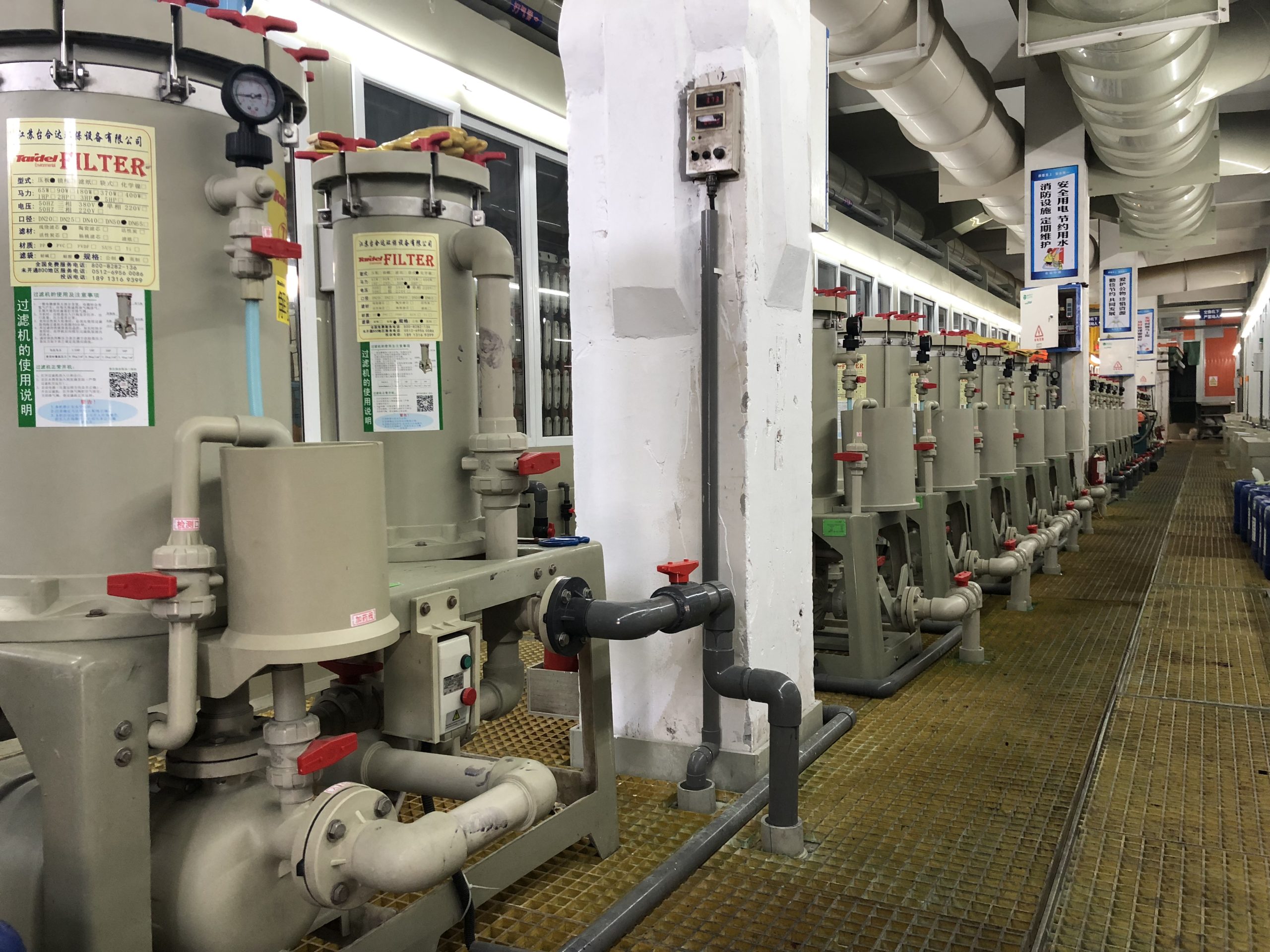
1. Cartridge Filter Units
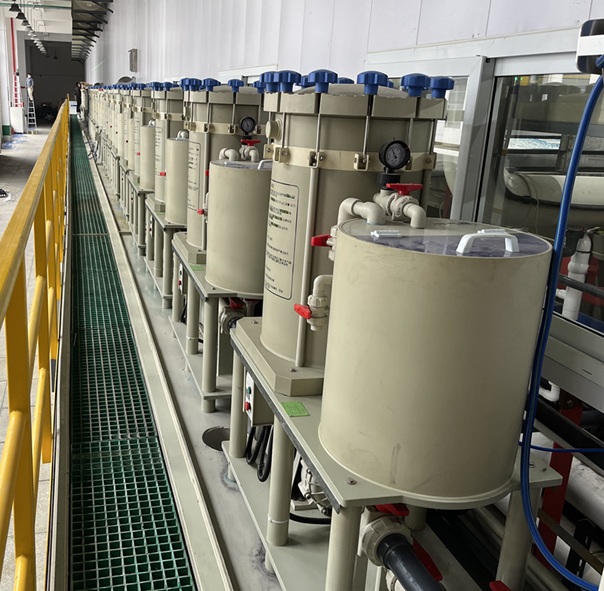
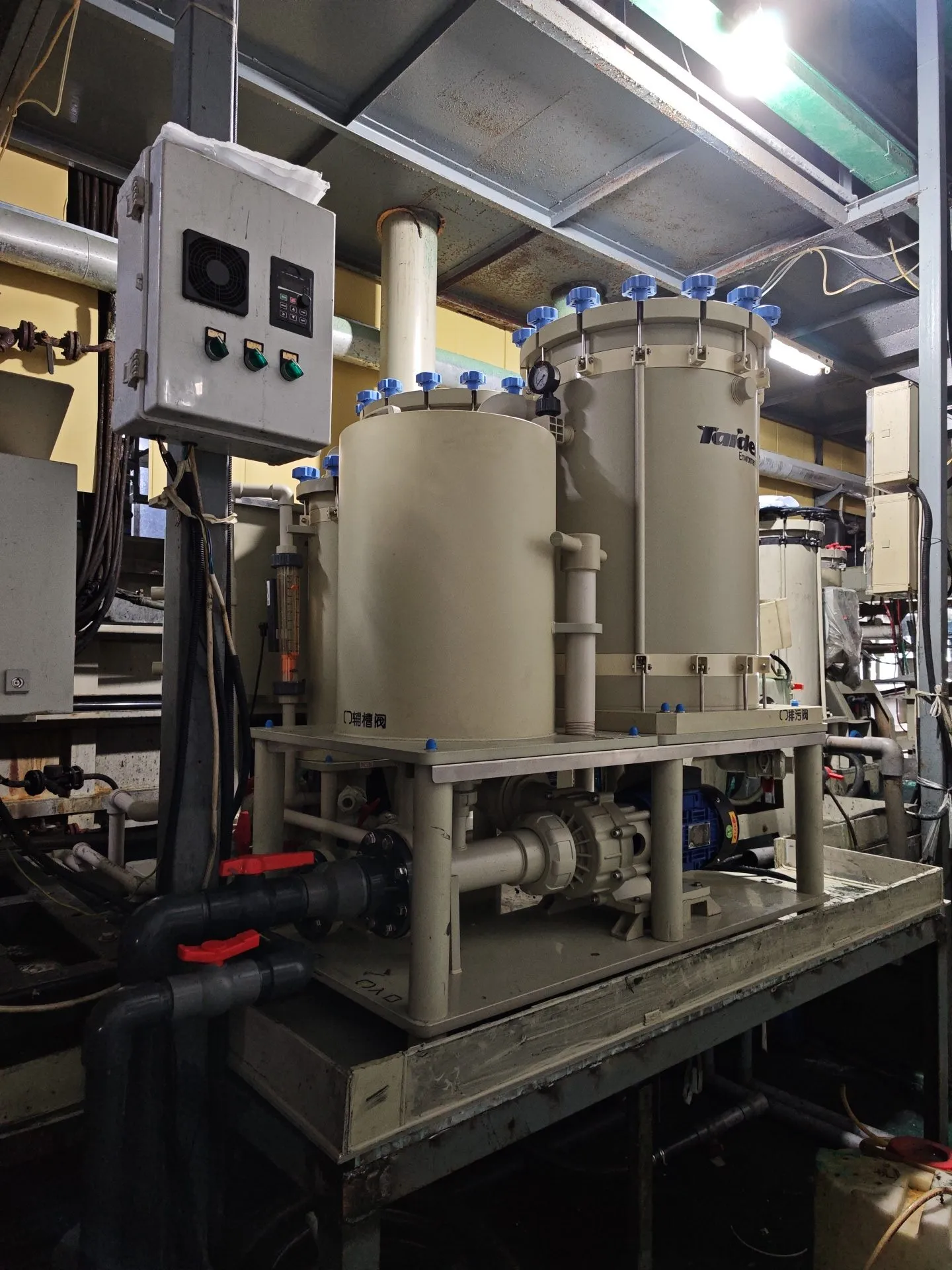
Cartridge filters are the industry standard for modern electroplating due to their modularity and ease of use.
-
Key Advantages:
-
Operational Efficiency: Cartridge replacement is rapid, minimizing downtime and labor intensity.
-
Consistent Micron Ratings: Filters come with certified ratings (e.g., $1\mu m, 5\mu m, 10\mu m$), ensuring predictable particle retention.
-
High Chemical Compatibility: Constructed from materials like Polypropylene (PP) or PVDF, they resist aggressive acids and alkaline baths.
-
-
Disadvantages:
-
Higher Consumable Cost: Cartridges are typically single-use and more expensive per unit than paper.
-
Surface Area Limitations: Standard melt-blown or string-wound cartridges have less surface area than folded paper, leading to faster clogging in high-sludge environments.
-
-
Best For: Nickel, Copper, and Zinc plating where high clarity and low maintenance are priorities.
2. Paper Filter Units (Plate and Frame)
These units utilize multiple layers of stacked filter paper and are designed for heavy-duty applications.
-
Key Advantages:
-
Massive Filtration Surface: The plate-and-frame design offers a significantly larger surface area, ideal for high-flow and high-sediment baths.
-
Minimal Operating Costs: Filter paper is the most cost-effective media available, drastically reducing long-term overhead.
-
Support for Filter Aids: You can “pre-coat” the paper with Diatomaceous Earth (DE) or activated carbon to achieve ultra-fine purification and remove organic impurities.
-
-
Disadvantages:
-
Labor Intensive: Changing the paper requires dismantling the plates, which is time-consuming and can lead to chemical spillage.
-
Leakage Risk: Improper alignment of the plates or worn gaskets can result in bypass or external leaks.
-
-
Best For: Chrome plating, Electroless Nickel, and high-contamination “dirty” baths.
Technical Comparison Table
| Feature | Cartridge Filter | Paper Filter (Plate & Frame) |
| Filtration Precision | High & Consistent | Variable (Depends on paper/aids) |
| Maintenance Frequency | Low | High |
| Consumable Cost | Moderate to High | Very Low |
| Ease of Cleaning | Excellent (Plug & Play) | Laborious (Manual cleaning) |
| Seal Integrity | Superior | Dependent on manual clamping |
Selection Guide: How to Choose?
-
For High-Throughput Automation: Choose Cartridge Filters. Their “plug-and-play” nature keeps the workshop clean and reduces the risk of human error during maintenance.
-
For High-Sludge Environments: If your bath generates heavy precipitates (like in etching or roughing tanks), Paper Filters are the logical choice to prevent constant, expensive cartridge clogging.
-
For Precision Electronics: Use Cartridge Filters with pleated $0.5\mu m$ or $1\mu m$ media to ensure absolute bath purity for micro-components.
-
The Hybrid Approach: Many top-tier facilities use a dual-stage system: a Paper Filter for primary “coarse” filtration followed by a Cartridge Filter for “polishing” the solution.
Final Verdict: Unless your contaminant levels are so high that cartridge costs become prohibitive, the Cartridge Filter is the more modern, efficient, and reliable choice for most 21st-century electroplating operations.