
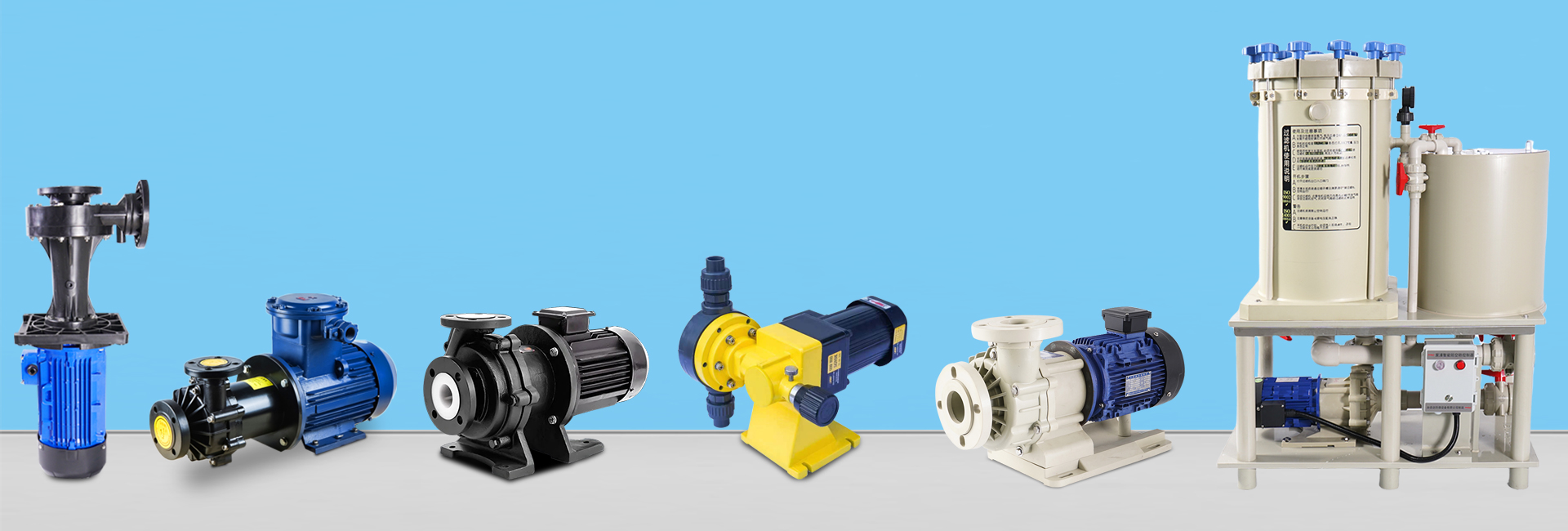
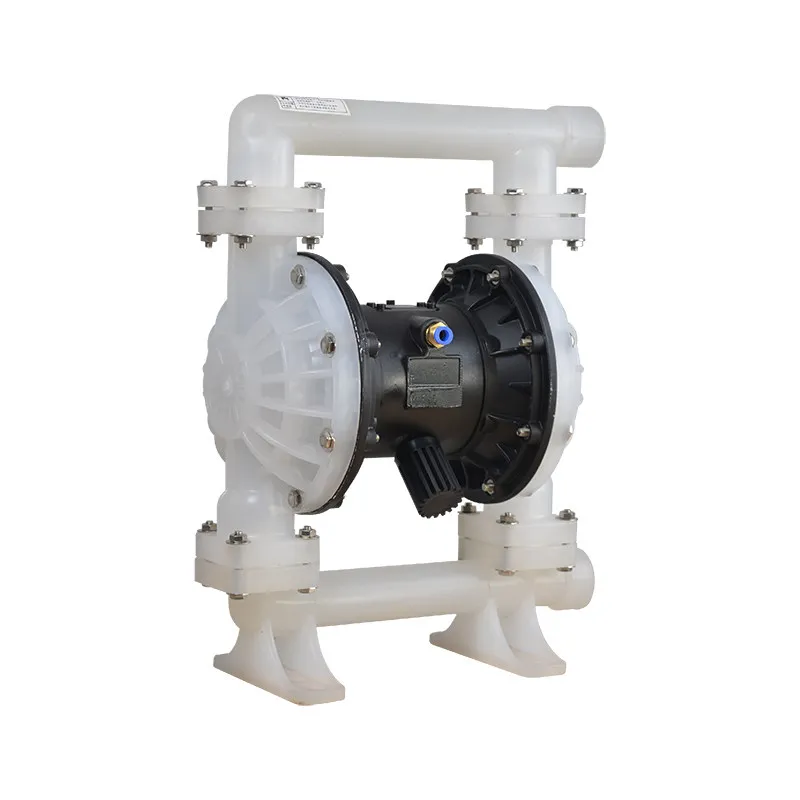

Impellers are one of the most critical components in chemical pumps. Their design and structure directly determine the pump’s flow, head, and efficiency. Depending on the medium, flow direction, and working conditions, impellers can be divided into several main types.
? 1. Classification by Flow Direction
1. Centrifugal (Radial Flow) Impeller
-
The liquid enters the center of the impeller and flows outward radially.
-
Features: Simple design, high efficiency, most commonly used.
-
Applications: Medium head and medium flow conditions, such as chemical process pumps and clean water pumps.
2. Mixed Flow Impeller
-
The liquid flow direction is between radial and axial.
-
Features: Lower head but higher flow rate.
-
Applications: Circulating systems or chemical processes requiring large flow and moderate head.
3. Axial Flow Impeller
-
The liquid moves mainly along the pump shaft.
-
Features: Very large flow, low head.
-
Applications: Cooling systems, low-head transfer, and large-scale chemical installations.
⚙️ 2. Classification by Suction Type
1. Single-Suction Impeller
-
The liquid enters the impeller from one side only.
-
Features: Compact structure, but produces higher axial thrust.
-
Applications: Small and medium-sized chemical pumps.
2. Double-Suction Impeller
-
The liquid enters from both sides of the impeller.
-
Features: Balanced axial force, higher flow capacity.
-
Applications: Large flow pumps, such as circulating or cooling water pumps.
? 3. Classification by Enclosure Type
1. Closed Impeller
-
Consists of front and back shrouds enclosing the vanes.
-
Advantages: High efficiency, suitable for clean or low-viscosity liquids.
-
Disadvantages: Not ideal for liquids containing solids or high viscosity.
-
Applications: Chemical process pumps, water pumps.
2. Semi-Open Impeller
-
Has a back shroud but an open front.
-
Advantages: Can handle small solids, easier to maintain.
-
Disadvantages: Slightly lower efficiency, more wear-prone.
-
Applications: Liquids with slight crystallization or minor impurities.
3. Open Impeller
-
No front or back cover; blades are completely exposed.
-
Advantages: Non-clogging, suitable for high-viscosity or solid-containing fluids.
-
Disadvantages: Lower efficiency and faster wear.
-
Applications: Slurry pumps, sewage pumps, or corrosive media transfer.
? 4. Special Impeller Designs
1. Non-Clogging (Vortex or Single-Channel) Impeller
-
Purpose: Designed to handle fibrous or particle-laden fluids.
-
Applications: Chemical wastewater pumps, self-priming chemical pumps.
2. Magnetic Drive Pump Impeller
-
Connected via magnetic coupling instead of a mechanical seal.
-
Features: Leak-free operation, ideal for toxic or corrosive liquids.
-
Applications: Corrosive chemical transfer and hazardous fluid handling.
3. Multistage Impeller
-
Several impellers are connected in series to increase head.
-
Applications: High-pressure systems and long-distance chemical liquid transfer.
✅ Summary Table
| Category | Type | Features | Typical Applications |
|---|---|---|---|
| Flow Direction | Centrifugal | Medium head, medium flow | General chemical pumps |
| Flow Direction | Mixed Flow | Low head, large flow | Circulation systems |
| Flow Direction | Axial Flow | Very large flow, low head | Cooling water pumps |
| Suction Type | Single-Suction | Compact design | Small pumps |
| Suction Type | Double-Suction | Balanced force, high flow | Large industrial pumps |
| Enclosure | Closed | High efficiency | Clean liquids |
| Enclosure | Semi-Open | Handles small solids | Slightly impure liquids |
| Enclosure | Open | Non-clogging | Slurry, wastewater |
| Special | Vortex Type | Clog-resistant | Wastewater, slurries |
| Special | Magnetic Drive | Leak-free | Corrosive media |
| Special | Multistage | High pressure | Long-distance pipelines |
? Conclusion
Choosing the right impeller type is essential for ensuring optimal performance and durability of a chemical pump.
For clean liquids, closed impellers are ideal.
For slightly contaminated or viscous fluids, semi-open impellers perform better.
For slurries or high-solid media, open or vortex impellers are the best choice.
And when dealing with toxic or corrosive chemicals, magnetic drive impellers offer the safest and most reliable solution.