

If the effluent from a bag filter is still turbid after filtration, there are generally 6 most common reasons. You can troubleshoot in order, and you can basically find the problem:
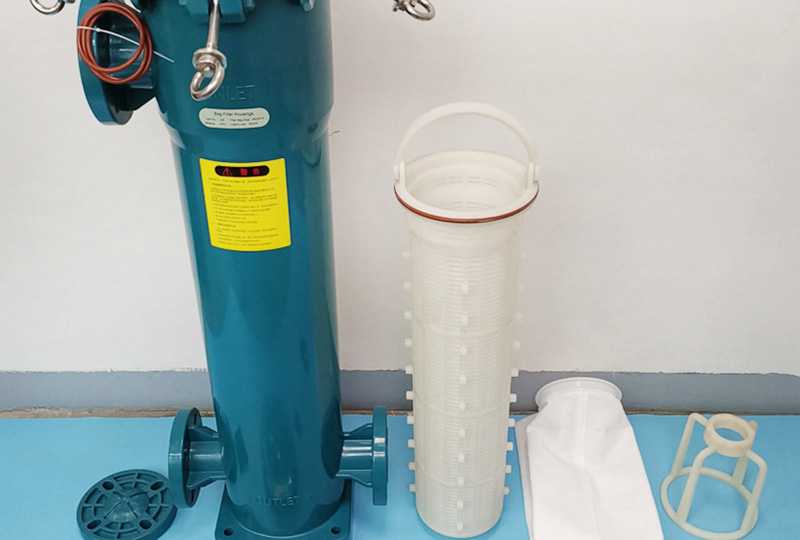
1. Problems with the Filter Bag Itself
-
Insufficient filter bag precision (e.g., 25μm is used when 5μm is required).
-
Filter bag is damaged, has holes, or is split.
-
The filter bag material is incorrect and is corroded or dissolved by the liquid.
2. Poor Installation and Sealing (Most Common)
-
The filter bag is not placed correctly, causing side leakage, and the liquid directly bypasses the filter bag (short-circuit).
-
The sealing ring is aged, deformed, or not compressed tightly.
-
The flange/quick-opening cover is not closed tightly.
3. Poor Pretreatment Before Filtration
-
Too many or too sticky impurities clog the filter bag instantly, and the pressure breaks the filter bag.
-
There are flocculents, oil, or colloids that the filter bag cannot retain.
-
Excessive air content causes air bubbles to carry out impurities.
4. Operation and Flow Rate Issues
-
The feed flow rate is too high or the flow velocity is too fast, which breaks through the filter layer.
-
Too much impact at the start of filtration tilts the filter bag.
-
The inlet and outlet are installed reversely.
5. Internal Equipment Problems
-
Rust or slag falling off inside the filter.
-
Dirty liquid from the previous operation remains in the dead corners and is flushed out during new filtration.
-
The basket is deformed and cannot support the filter bag.
6. Characteristics of the Liquid Itself
-
There are emulsified oil, colloids, or microorganisms that cannot be filtered by ordinary filter bags.
-
Excessively high temperature causes the filter bag to shrink and fail.