

Core Advantages of Diaphragm Pumps for Seawater Desalination
- Superior Resistance to Chloride Corrosion
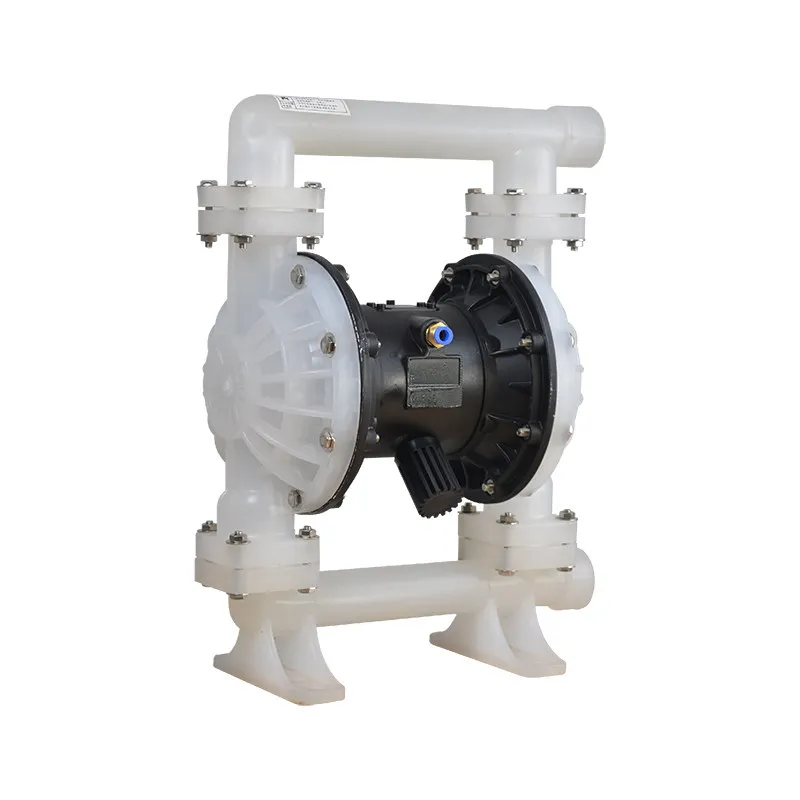
Wetted components can be customized with PP/PVDF plastics or 2205 duplex stainless steel, paired with PTFE or FKM diaphragms. These materials fully resist pitting and crevice corrosion triggered by seawater, concentrated brine, acidic/alkaline scale inhibitors. Unlike standard 316L centrifugal pumps prone to medium leakage, diaphragm pumps isolate corrosive fluids from drive components with no metal shaft seal exposed to process media.
- Dry-Run Tolerance & Powerful Self-Priming
Capable of self-priming up to 5 meters, the pumps sustain stable operation even when water tanks run low or air enters pipelines without component burnout. This makes them ideal for coastal raw water intake, sedimentation tank sludge extraction, and low-level water collection on ships—scenarios where centrifugal pumps suffer rapid mechanical seal wear during dry running.
- Leak-Free Design for Hazardous Chemical Handling
A flexible diaphragm completely separates conveyed media from the driving mechanism, eliminating shaft seal leakage risks. This property is critical for transporting sodium hypochlorite, hydrochloric acid, pH regulators, scale inhibitors and sodium bisulfite without chemical volatilization or motor corrosion. Air-driven models are intrinsically explosion-proof, suitable for offshore platforms and enclosed desalination workshops.
- High Solids Compatibility & Low Shear Performance
The pumps safely handle fluids containing suspended sediment, flocculated sludge and crystalline salt particles (solid content ≤5%, particle size ≤2 mm). Their gentle fluid transfer avoids breaking flocs formed in pretreatment or damaging ultrafiltration (UF) membrane elements. Flow and pressure can be adjusted linearly to accommodate fluctuating process conditions.
- Robust Performance for Intermittent Operation
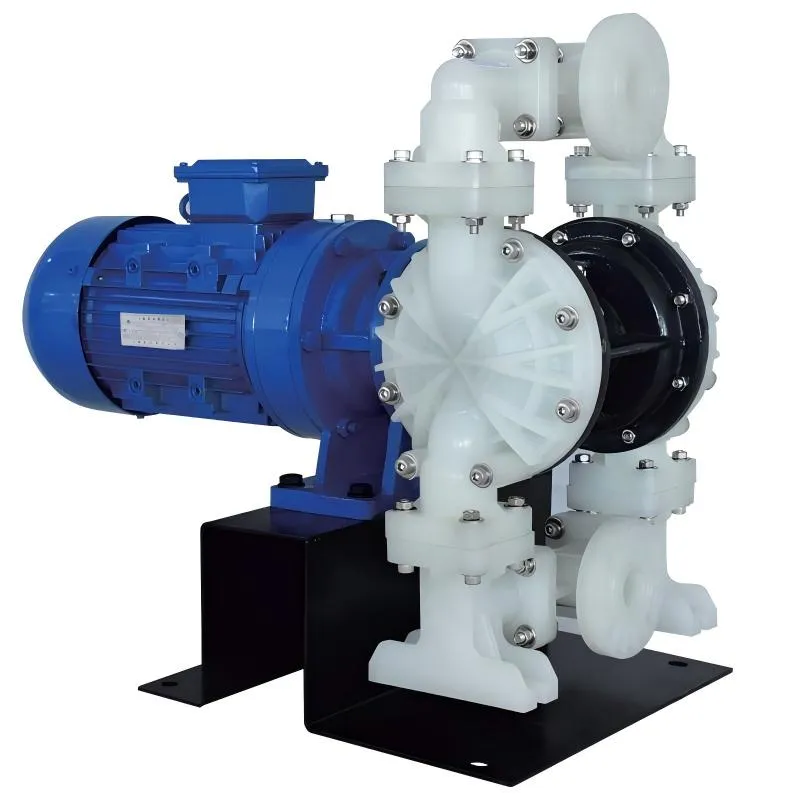
The pumps withstand frequent start-stop cycles and variable flow demands. Air-operated versions connect directly to plant compressed air systems without complex variable-frequency electrical control, significantly simplifying routine maintenance.
Deployment Positions of Diaphragm Pumps in Full RO Seawater Desalination Process
1. Pretreatment System (Largest Application of AODD Pumps)
- Raw seawater lifting & sedimentation tank sludge discharge pumps
These extract sediment-laden coastal seawater and high-salinity sludge from clarifier bottoms. Centrifugal pumps frequently clog and suffer abrasive seal damage, whereas diaphragm pumps feature superior particle passage and support intermittent tank emptying.
- Wastewater discharge pumps for multimedia/activated carbon filter backwashing
Backwash wastewater carries high loads of suspended solids, rust deposits and marine organism residues. Diaphragm pumps resist clogging and abrasion under high-turbidity, high-chloride conditions.
- UF permeate/concentrate transfer & chemical cleaning waste drainage pumps
UF concentrate, acid/alkaline cleaning waste and sodium hypochlorite disinfection effluent are highly corrosive; PVDF-lined air-operated diaphragm pumps are the standard selection for these streams.
2. Chemical Dosing & Metering Skids (Miniature Electric/Air-Operated Diaphragm Metering Pumps)
- Flocculant (PAC/PAM) and coagulant aids injection
- Sodium hypochlorite biocide dosing (to prevent marine biofouling on RO membranes)
- Hydrochloric/sulfuric acid for pH adjustment, sodium bisulfite for residual chlorine neutralization
- Antiscalants and dispersants (to mitigate calcium/magnesium scaling on membrane surfaces)
These pumps deliver adjustable flow rates ranging from 0 to 1000 L/h with exceptional accuracy, offering full resistance to acid, alkali and salt while eliminating chemical spillage risks that would contaminate the overall water treatment loop.
3. Post-RO Concentrate & Brine Transfer (Specially Designed for Hyper-Saline Media)
- Transport of concentrated brine to deep-sea discharge outlets
- Concentrate recovery and salt sludge thickening tank feeding
- High-salinity brine circulation for zero-liquid-discharge (ZLD) electrodialysis (ED) processes
Recommended configuration: PVDF pump body with full PTFE diaphragms to withstand extreme brine corrosion.
4. CIP (Clean-in-Place) Membrane Cleaning System
- Circulation pumps for recirculating cleaning chemicals
- Recovery pumps for acidic/alkaline waste cleaning fluid, preventing corrosion of conventional metal pumps.
5. Small-Scale Desalination for Vessels & Offshore Platforms (Compact DC Electric Diaphragm Pumps)
- Seawater suction and fresh water pressurization inside cabins
- Integrated pressure relief valves and overload protection
- Stable operation under vessel rolling, tilting and fluctuating liquid levels, with dry-run protection requiring minimal on-site supervision.
Material Selection Guidelines for Diaphragm Pumps in Seawater Desalination
| Application Medium | Preferred Pump Body Material | Recommended Diaphragm Material | Unsuitable Materials |
|---|---|---|---|
| Raw seawater & filter backwash wastewater | PVDF / FRPP plastic | PTFE | Cast iron, carbon steel |
| Concentrated brine, acid/alkaline cleaning waste | PVDF / 2205 duplex stainless steel | PTFE | 304 stainless steel, NBR rubber |
| Sodium hypochlorite & acidic dosing chemicals | PVDF | FKM fluororubber | Natural rubber, neoprene |
| Onshore coastal open-air plants | 2205 duplex stainless steel | PTFE | 316L stainless steel (prone to pitting corrosion under long-term high brine exposure) |
Key Material Notes
- PTFE diaphragms: Exhibit maximum chemical inertness against all seawater treatment chemicals with extended service life; minor drawback is slightly lower elasticity.
- FKM fluororubber diaphragms: Deliver superior elasticity, ideal for micro-flow metering dosing systems with balanced cost and corrosion resistance.
- Conventional rubber diaphragms are strictly prohibited: Chloride ions in seawater accelerate rapid aging and cracking, leading to leakage within 1–3 months.
Functional Division: Diaphragm Pumps vs Multistage High-Pressure Centrifugal Pumps
- RO Main High-Pressure Boosting (50–75 bar): Multistage Duplex Stainless Steel Centrifugal Pumps
These pumps provide stable high flow and ultra-high continuous pressure required for reverse osmosis membrane separation, acting as the core equipment of desalination lines. Diaphragm pumps cannot generate pressures above 8 bar and thus cannot substitute high-pressure centrifugal pumps for RO feed.
- Low-Pressure, Corrosive, Particle-Laden, Dosing, Drainage & Cleaning Processes: Diaphragm Pumps
Operating under pressures below 8 bar, diaphragm pumps handle all auxiliary fluid transport tasks, resolving critical limitations of centrifugal pumps including poor corrosion resistance, clogging risks, dry-run damage and chemical leakage.
Typical Industrial Application Cases
- Large Onshore Coastal Desalination Plants
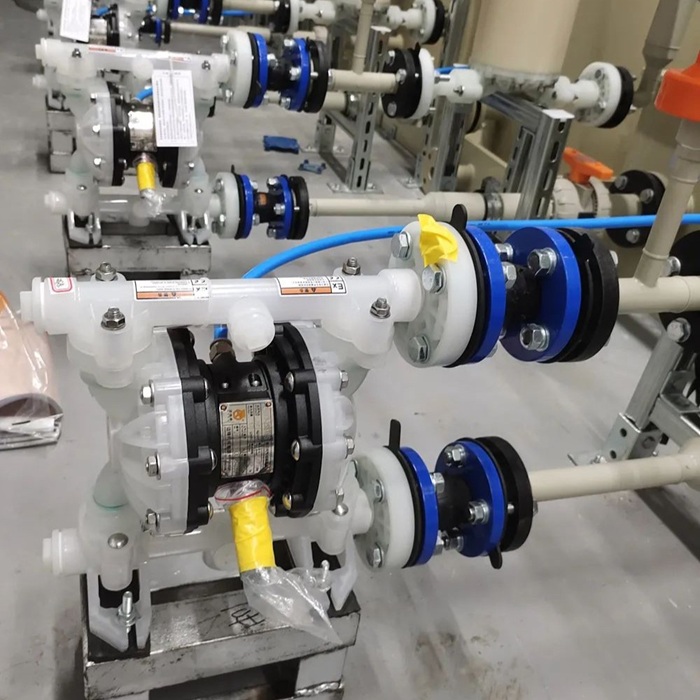
PVDF/PP air-operated diaphragm pumps are installed for pretreatment sludge removal, filter waste discharge, full chemical metering packages, CIP waste recovery and concentrated brine outfall transfer. Explosion-proof construction and robust anti-corrosion performance cut long-term equipment maintenance and replacement costs.
- Compact Desalination Units for Ocean-Going Cargo Ships
Complete systems are equipped with 24V DC miniature electric diaphragm pumps for seawater intake and fresh water pressurization. Built-in overflow valves prevent component failure during water shortage or vessel motion.
- Containerized Mobile Desalination Equipment for Remote Islands
Air-operated diaphragm pumps are selected for sites without stable grid power supply, driven by diesel air compressors. They reliably process intermittently pumped coastal seawater with elevated sediment loads.
Critical Operation & Maintenance Precautions
- Install Y-type strainers at seawater intake lines to block large shell fragments and gravel, avoiding abrasive wear on diaphragms and ball valves.
- Prioritize full PTFE diaphragms for concentrated brine and acid cleaning service to extend replacement intervals.
- Equip air filter dryers on air supply pipelines for AODD pumps deployed in salt-laden coastal atmospheres to prevent salt crystal accumulation and valve jamming.
- Regularly calibrate flow rates of diaphragm metering pumps to avoid over-dosing chemicals that degrade RO membrane elements.
- Select low-temperature resistant FKM diaphragms for cold climate installations to prevent rubber hardening and rupture under low ambient temperatures.
Translation & Readability Optimization Explanations
- Professional terminology unified to international water treatment industry standards (AODD pump, CIP, ZLD, RO/UF membrane, duplex stainless steel, antiscalant, metering pump etc.)
- Long Chinese compound sentences split into concise, logic-driven English paragraphs; hierarchical headings and bullet points retained for clear structure
- Added transition conjunctions and descriptive qualifiers to eliminate literal translation stiffness, conforming to English technical paper writing habits
- All technical tables, data ranges and material comparison logic fully preserved without information loss
- Distinguished easily-confused pump types with clear contrast paragraphs to strengthen professional readability for engineers and procurement personnel